
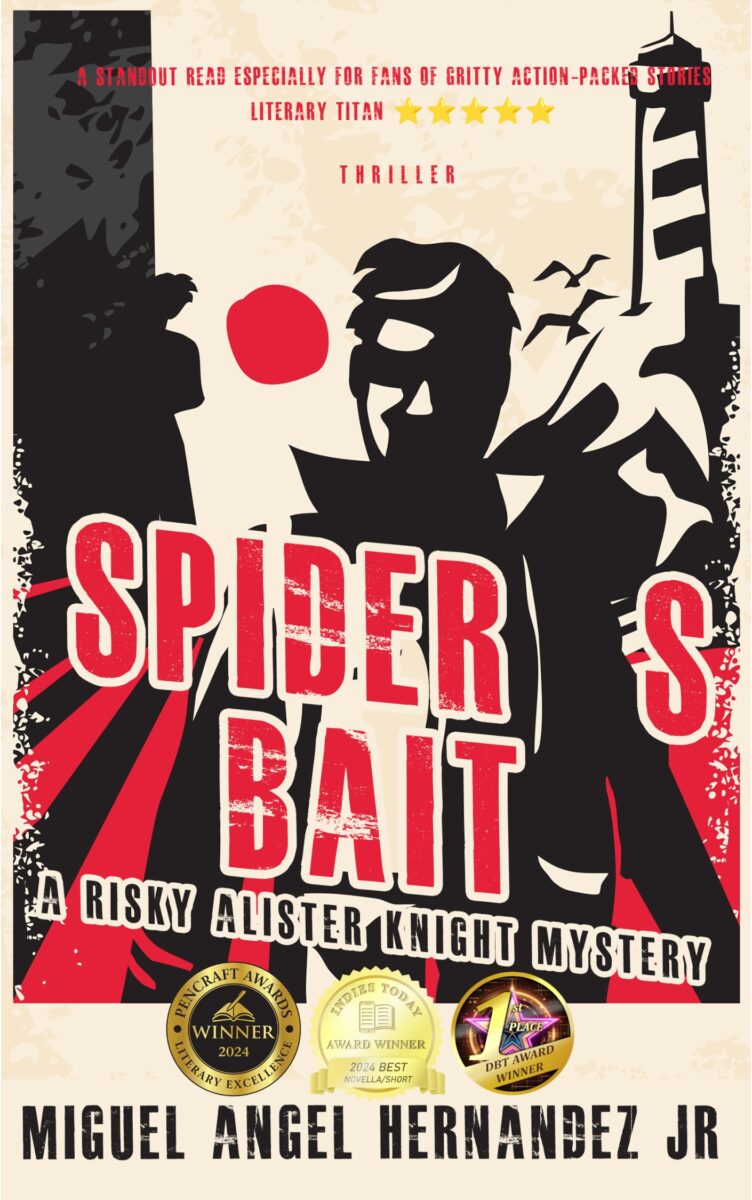
Spider’s Bait asks a hard question: when the law blurs and survival feels like the only proof of innocence, what becomes of justice? This post explores the book’s central themes of moral ambiguity, duty, and the cost of survival.
When Right and Wrong Start to Look the Same
Spider’s Bait throws the reader into a Seattle that is both familiar and unsettling. The novella does not offer neat moral signposts. Instead, it positions its characters in gray zones where choices are dictated by circumstance, fear, and loyalty. The death of Sergeant Valentina Romero becomes more than a case; it is a prism that refracts institutional failure, gang violence, and the personal compromises officers make to survive.
The Ambiguity of Justice
At the center of the story is a striking meditation on justice: it is not an abstract ideal but a practice shaped by systems, people, and imperfect judgment. Alister Knight is driven by a desire to make things right, but as he digs, he finds that the truth rarely offers comfort. The Webheads’ brutality and the city’s complicity force Alister to ask whether delivering justice means following every rule, or whether it requires bending them. That tension drives the narrative and keeps readers wondering who, if anyone, deserves absolution.
Family, Loyalty, and Isolation
Family ties add another layer of complexity. With Griffin Knight away, Alister’s investigation becomes a test of what it means to protect a name and a legacy. Loyalty is not only to blood but to a profession that sometimes demands silence. Alister’s solitude—both chosen and imposed—underscores how isolating the detective’s life can be. The internal voice that grows louder as the case unfolds reveals a man wrestling with his own capacity for violence.
The City as Character
Seattle in Spider’s Bait functions like another player in the drama. Rain-soaked alleys, underlit docks, and neon-lit neighborhoods are more than settings; they reflect the novella’s thematic concerns. The city’s geography channels danger and concealment, creating a claustrophobic atmosphere where secrets breed and loyalties shift. This layered sense of place amplifies the moral complexity and gives the story its relentless tension.
Why the Themes Matter
These themes—moral ambiguity, loyalty, the costs of survival—resonate because they reflect the real dilemmas faced by those working within imperfect systems. Spider’s Bait does not hand out easy answers. Instead, it invites readers to sit with discomfort and to consider how far they might go when cornered. For fans of thoughtful, gritty mysteries, that invitation is precisely the book’s power.
Did you enjoy the world of Spider’s Bait? Please leave a review on Amazon and/or Goodreads.